 Free Orthopaedic Injury Advice
 Orthopaedic Urgent Cares
 Pay Bill
 Patient Portal
 Schedule an Appointment

What to Know About Total Joint Replacement Surgery
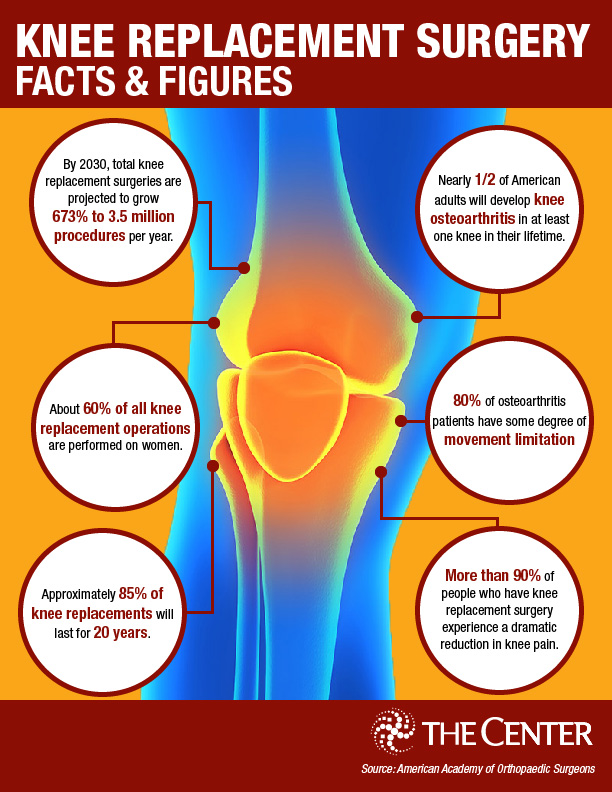
In 2021, over 2.2 million hip and knee procedures were reported in the United States. And it’s estimated that total knee replacement surgeries are projected to grow 673% by the year 2030.
A total joint replacement is a surgery where parts of an arthritic or damaged joint are removed. Then a metal, plastic, or ceramic device called a prosthesis is put in to replace the removed parts. This device is designed to let the joint move like it would if it were healthy.
Hip and knee replacements are the most common types of joint replacements. But replacement surgery can also be done on other joints, like the ankle, wrist, shoulder, and elbow.
Why joints are replaced
A joint is a place in the body where two or more bones meet. There are different types of joints in the body. For example, the knee is a hinge joint that can bend and straighten like a door. The hip and shoulder are ball-and-socket joints where the round end of one bone fits into a cup-shaped area on another bone.
There are a few things that can cause joint pain and disability. Often, this is from damage to the cartilage on the ends of the bones. This can be from arthritis, a fracture, or another condition. Your doctor may recommend total joint replacement surgery if you do not find relief from nonsurgical treatments like medications, physical therapy, and activity modifications.
What to expect during joint surgery
Total joint replacement surgery takes a few hours and is performed in a hospital or outpatient surgery center. During surgery, the damaged cartilage and bone are removed from your joint. The prosthetic component is put in its place. It is made of metal, plastic, or ceramic. This component will mimic the shape and movement of your natural joint. For example, in an arthritic hip, the damaged ball (upper end of the femur) is replaced with a metal ball attached to a metal stem that is fitted into the femur. A plastic socket is implanted into the pelvis to replace the damaged socket.
Recovery and rehabilitation
Everyone’s recovery and rehabilitation process will be different. Your doctor will generally tell you to use your “new” joint shortly after your operation. Although it may be difficult at times, following your doctor’s instructions will speed up your recovery process.
It is normal for patients to experience some pain in the replaced joint as their body gets used to the new joint and the tissues heal. This pain usually subsides within a few months.
Exercise is an essential part of recovering from surgery. Your doctor or physical therapist will give you exercises to help improve movement and strength in your joints. Please consult your doctor if you have any questions about what you can and cannot do after surgery.
Long-term results
Most people find that they can do more after joint replacement surgery. Most people also find that their new joint lasts for many years, which gives them a better quality of life. This includes less pain and improved motion and strength.
If you’d like to learn more or see if a total joint replacement is suitable for you, contact Ozark Orthopaedics at (479) 521-2752.