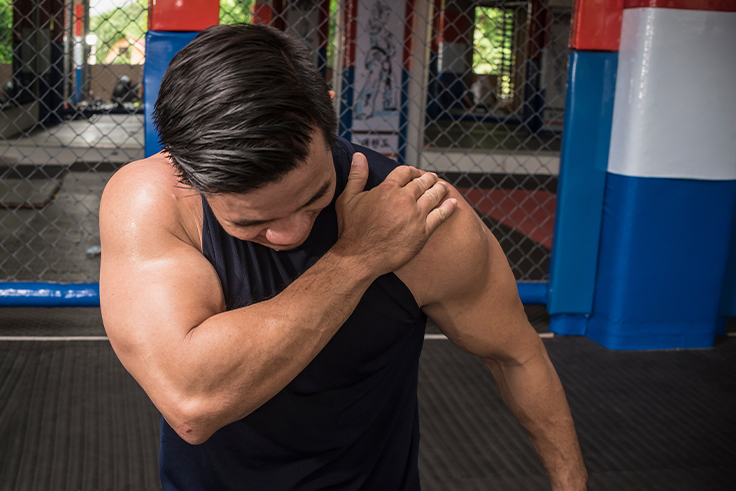
What is a rotator cuff tear?
Your rotator cuff is made of four muscles grouped with tendons that surround your shoulder joint. These keep your upper arm securely attached to your shoulder socket. Your rotator cuff works to stabilize your shoulder joint and help you move.
A rotator cuff tear occurs when the tendons become injured. A partial tear happens when a tendon is still attached to the arm bone, but not completely. When a tendon in this area separates entirely from the bone, this results in a complete tear. This type of injury is one of the most common sports medicine injuries that occur.
What are the Symptoms of a Rotator Cuff Tear?
While symptoms can vary from person to person, typically a rotator cuff tear results in:
• A dull pain in your shoulder and arm
• Difficulty raising your arm
• Shoulder pain that grows worse at night or when your arm is at rest
• Weakness in your shoulder
• Difficulty lifting
As with many orthopedic injuries, a torn rotator cuff can be diagnosed through an X-ray, and MRI, or an ultrasound, to reveal tears in the tendon.
Treatment
The bad news is, if not treated in time, a rotator cuff tear could become worse. You want to pay attention to it. You don’t want to develop chronic shoulder pain or have permanent difficulty using your arm.
A completely torn rotator cuff won’t heal on its own without surgery. The good news is, however, that many people find they can improve the use of their shoulder and any pain they experience without surgery.
This can be done by:
• Strengthening the shoulder muscles
• Undergoing physical therapy
• Resting your arm in a sling
• Receiving localized steroid injections
• Taking nonsteroidal anti-inflammatory drugs
With care and rehabilitation, most people can recover from a damaged shoulder and regain their movement. It is possible to tear the same area again as it has been weakened, however, and keeping your shoulder muscles and tendons flexible and strong is important. Talk to your doctor to find the best treatment for you.
The orthopaedic physicians at the Ozark Orthopaedics Sports Medicine Center are experts in diagnosing and treating injuries of the shoulder. If you need orthopaedic care for your rotator cuff tear, trust our team to get you back to the activities you love. Request an appointment today by calling (479) 521-2752.
 Free Orthopaedic Injury Advice
 Orthopaedic Urgent Cares
 Pay Bill
 Patient Portal
 Schedule an Appointment